
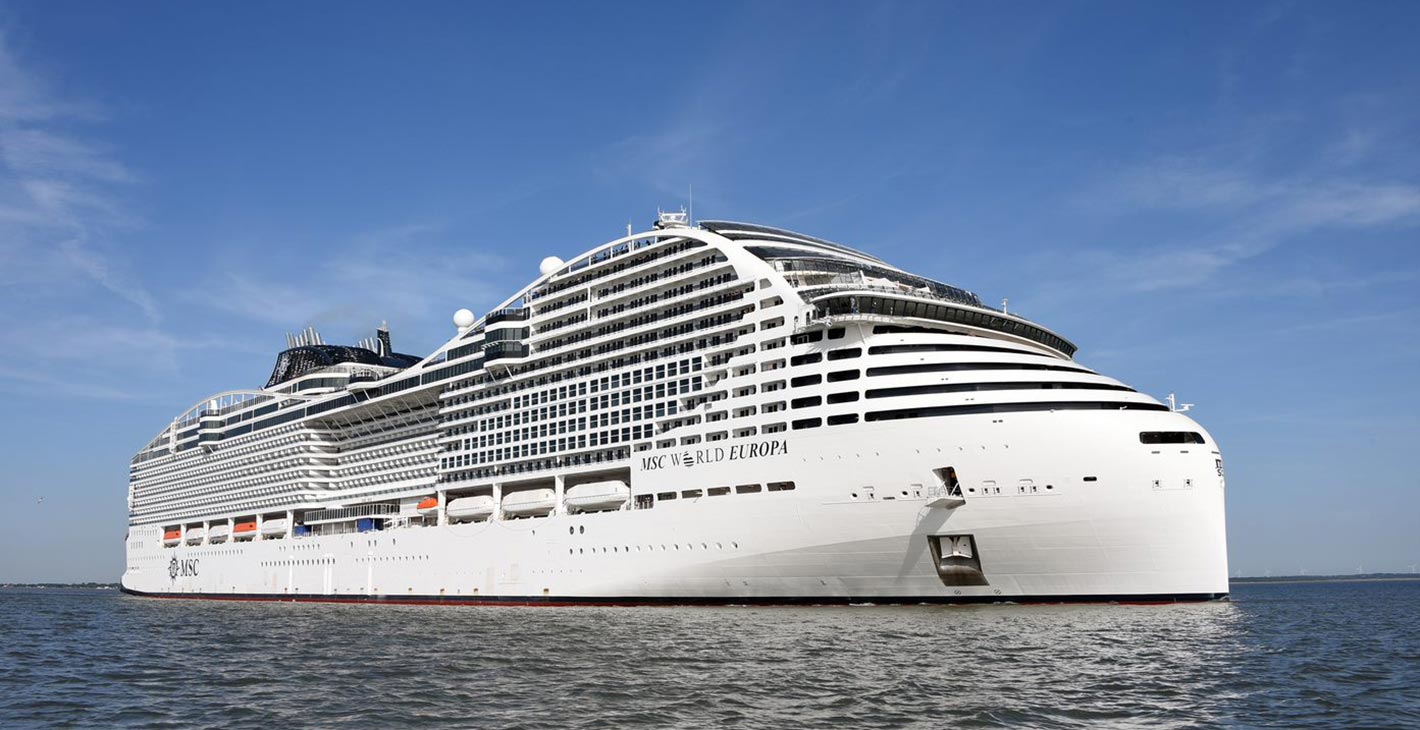
How to anchor a boat correctly
Knowing how to anchor a boat is one of the basic manoeuvres that every skipper must master. Whether you’re enjoying a cove, spending the night in a sheltered bay or making a stopover during a crossing, a good anchor ensures the safety of the boat, the crew and the environment.
Although it may seem like a simple manoeuvre, anchoring a sailing yacht or motorboat requires planning, knowledge of the seabed and correct execution. In this guide, we explain everything you need to know to do it safely.
What does it mean to anchor a boat?
Anchoring involves keeping a boat stationary in one position using an anchor attached to the boat by a chain, a rope or a combination of both. The aim is to prevent the wind, waves or current from moving the boat.
A well-executed anchorage allows you to stay safely in an area without needing to moor in a harbour, provided the weather conditions and the chosen location are suitable.
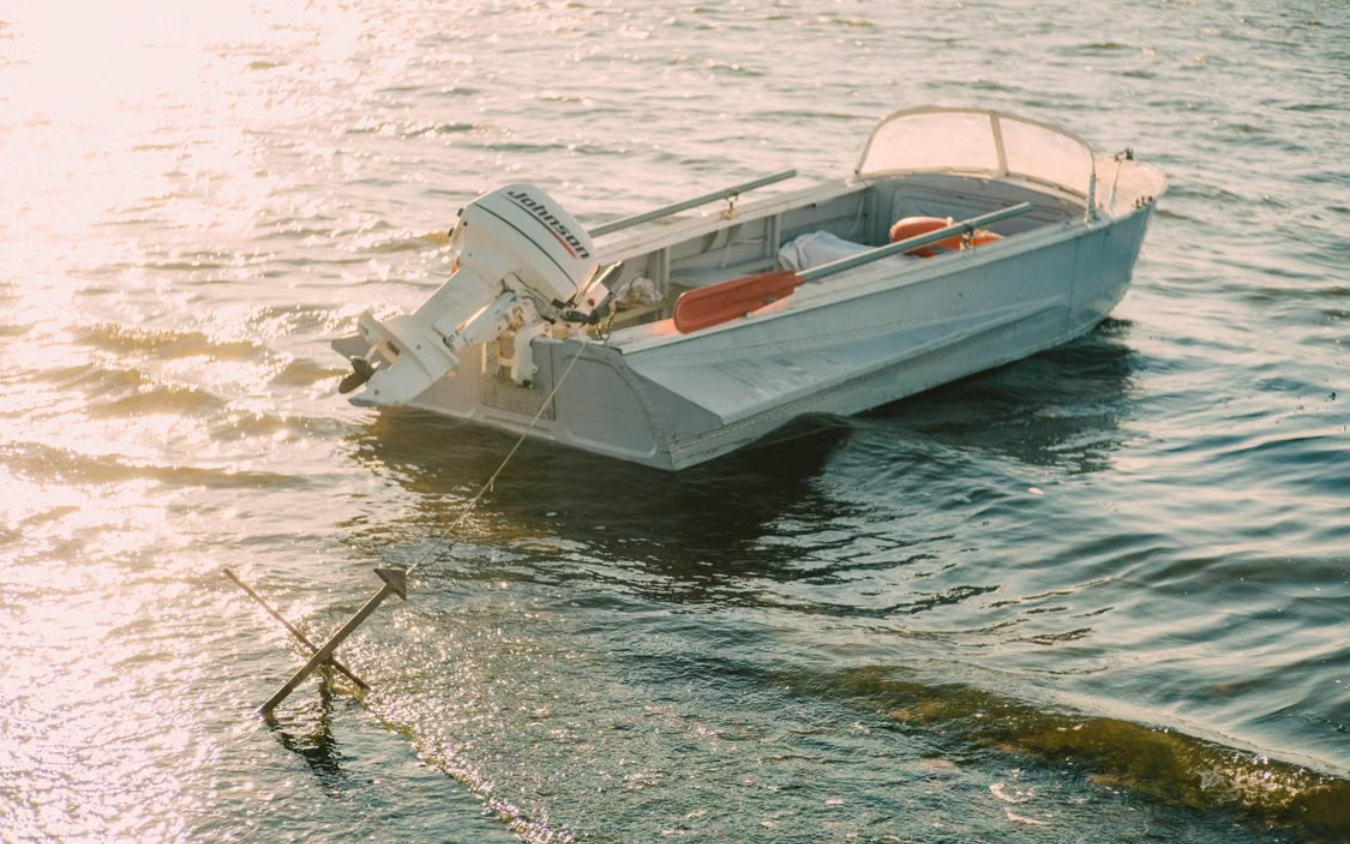
How to choose the right place to anchor
Before beginning the manoeuvre, it is advisable to spend a few minutes assessing the surroundings. Choosing a good spot is just as important as anchoring correctly.
Some points to bear in mind are:
- Look for an area sheltered from the prevailing wind and swell.
- Check the depth and ensure there is sufficient clearance beneath the keel.
- Check the type of seabed. Sand and mud generally provide the best hold for the anchor, whilst rocky areas or Posidonia beds make it difficult for the anchor to grip and may damage protected ecosystems.
- Maintain a safe distance from other vessels, buoys, navigation channels or swimming areas.
- Check the weather forecast, especially if you plan to anchor for several hours or overnight.
Steps for anchoring a boat correctly
1. Approach the anchorage point slowly
The boat should approach slowly, preferably heading into the wind or, if the wind is very light, into the current. This allows for greater control during the manoeuvre.
Before reaching the chosen spot, it is advisable to have the entire manoeuvre prepared: the anchor ready to be dropped, the windlass set up and the crew coordinated.
2. Dropping the anchor without throwing it
One of the most common mistakes is to throw the anchor into the water with force. The correct method is to let it descend in a controlled manner until it reaches the seabed.
Once it has settled, the boat will begin to drift backwards slowly as the chain is paid out.
3. Setting the correct length of chain
The length of chain is one of the factors that most influences the safety of anchoring.
As a general rule, it is recommended to let out between three and five times the depth when conditions are favourable.
If the wind or swell increases, it may be necessary to let out between five and seven times the depth to improve the anchor’s angle of engagement and increase its holding power.
For example, if the depth is five metres, it is advisable to let out between 25 and 35 metres of chain when conditions are more challenging.
4. Check that the anchor has caught firmly
Once the chain has been let out, you can reverse slightly to check that the anchor has caught properly on the seabed.
Over the next few minutes, it is advisable to observe landmarks on shore or use the GPS to confirm that the boat remains stable and is not drifting.
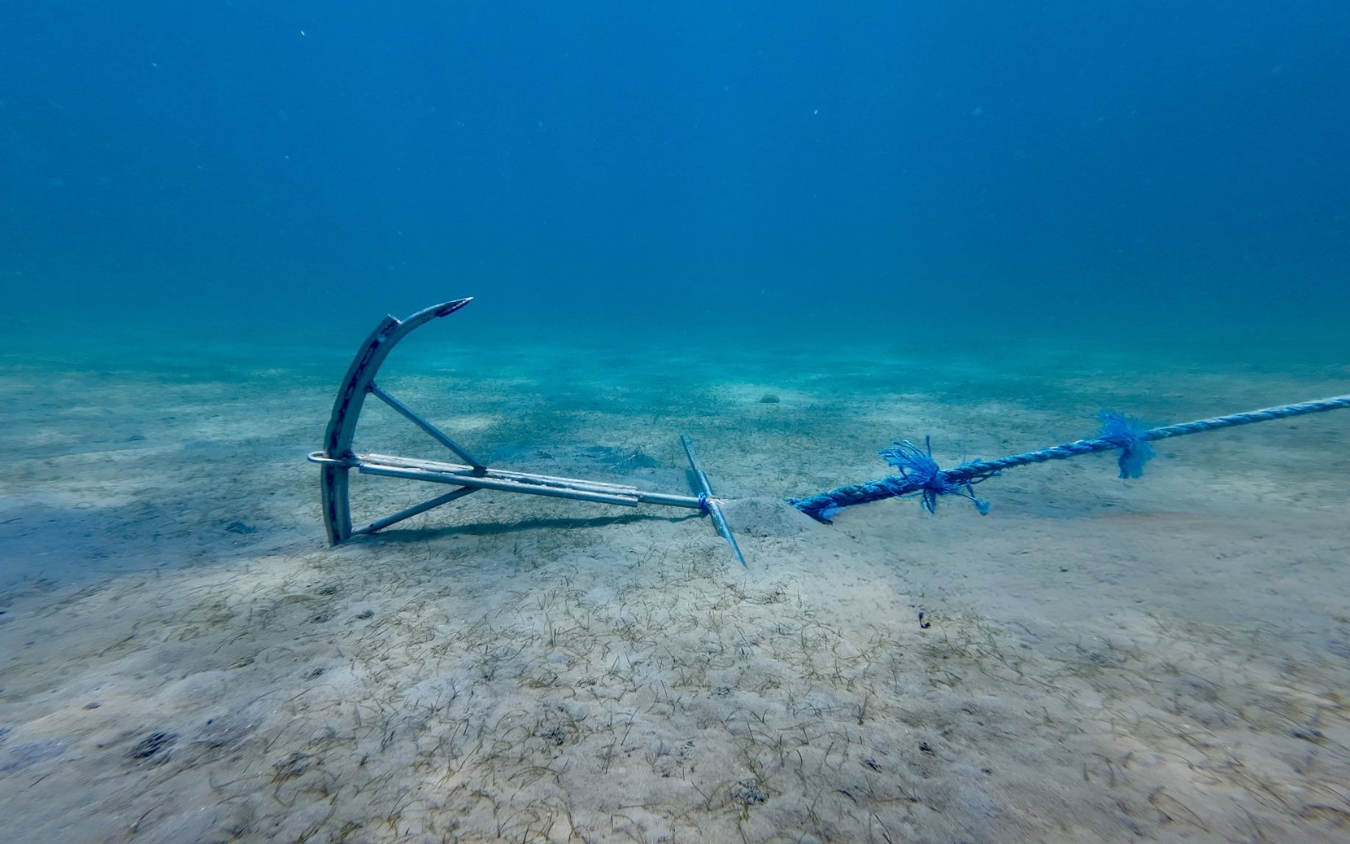
How to anchor a sailing boat
Although the manoeuvre is very similar, anchoring a sailing boat has some specific features.
The larger sail area makes this type of boat more sensitive to the wind, even with the sails furled. It is therefore important to control the approach carefully and ensure that the boat is correctly aligned with the wind once anchored.
It is also advisable to check the chain tension regularly, especially when the wind strength or direction changes.
Common mistakes when anchoring
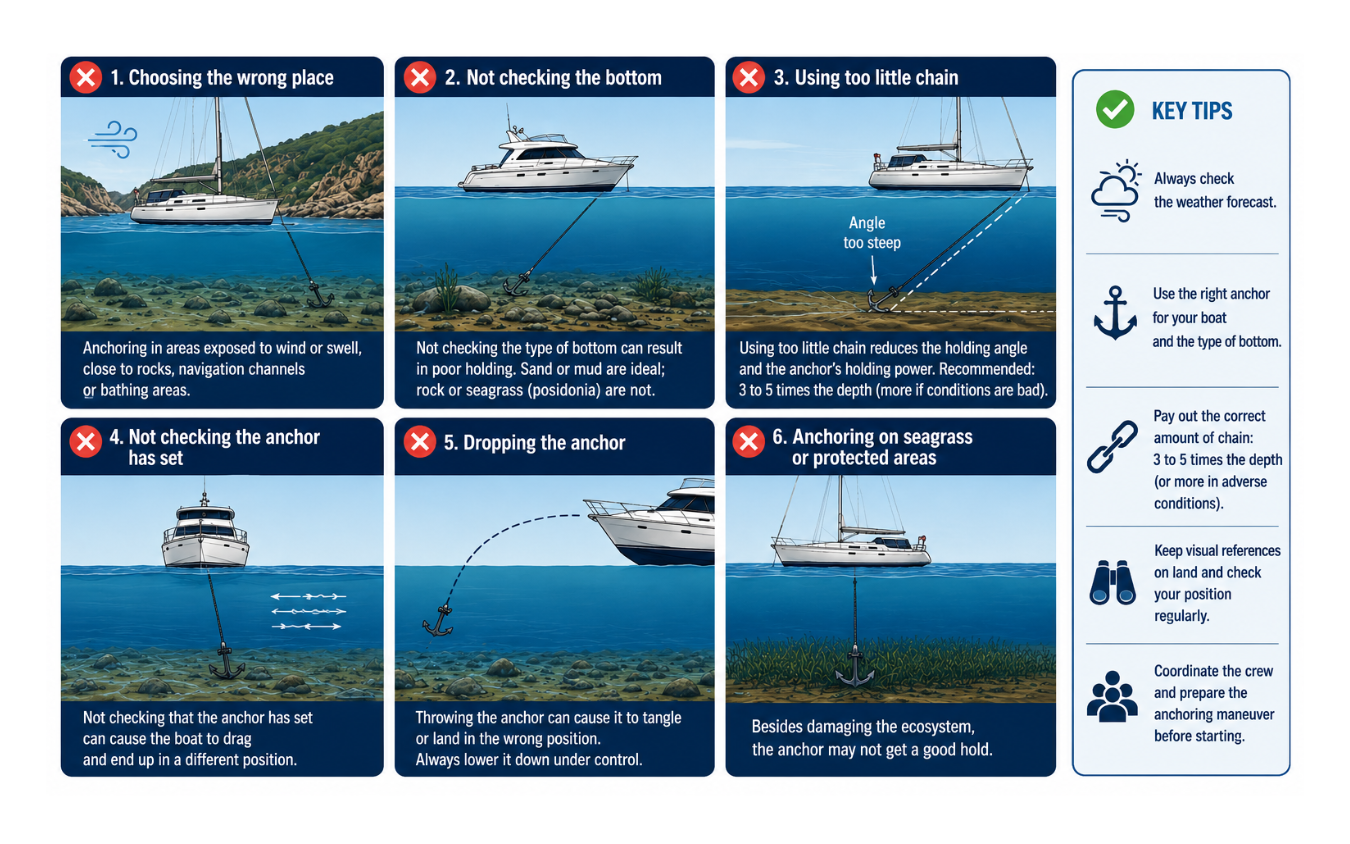
Many problems encountered whilst anchoring stem from small, easily avoidable mistakes. Among the most frequent are:
- Choosing an area with little shelter.
- Failing to check the type of seabed.
- Laying out too little chain.
- Failing to check that the anchor has caught properly.
- Anchoring over Posidonia seagrass beds or other protected areas.
- Failing to take into account possible changes in wind during your stay.
Tips for safer anchoring
Before leaving the boat or spending several hours at anchor, it is advisable to carry out a final check.
Check that the boat is holding its position, review the weather forecast and ensure there is sufficient space for the boat to drift without the risk of colliding with other vessels.
If the wind starts to pick up significantly or conditions deteriorate, the wisest course of action is usually to weigh anchor and seek a harbour or a more sheltered anchorage.
Good anchoring means safety
Mastering the manoeuvre of anchoring a boat not only brings peace of mind whilst sailing, but also helps to protect the boat and the marine environment.
With proper planning, a suitable choice of location and a manoeuvre carried out calmly, anchoring a sailing boat or any other vessel becomes a simple and safe operation that will allow you to enjoy the sea with complete confidence.









_v2.svg)
_v2.svg)









_v2.svg)