

Types of paddle surf boards: classification
Paddle surfing has become one of the most popular water sports thanks to its accessibility and versatility. However, to enjoy it to the fullest, it is essential to know the different types of paddle surfboards and which one best suits your level, your goals, and the conditions in which you will be surfing.
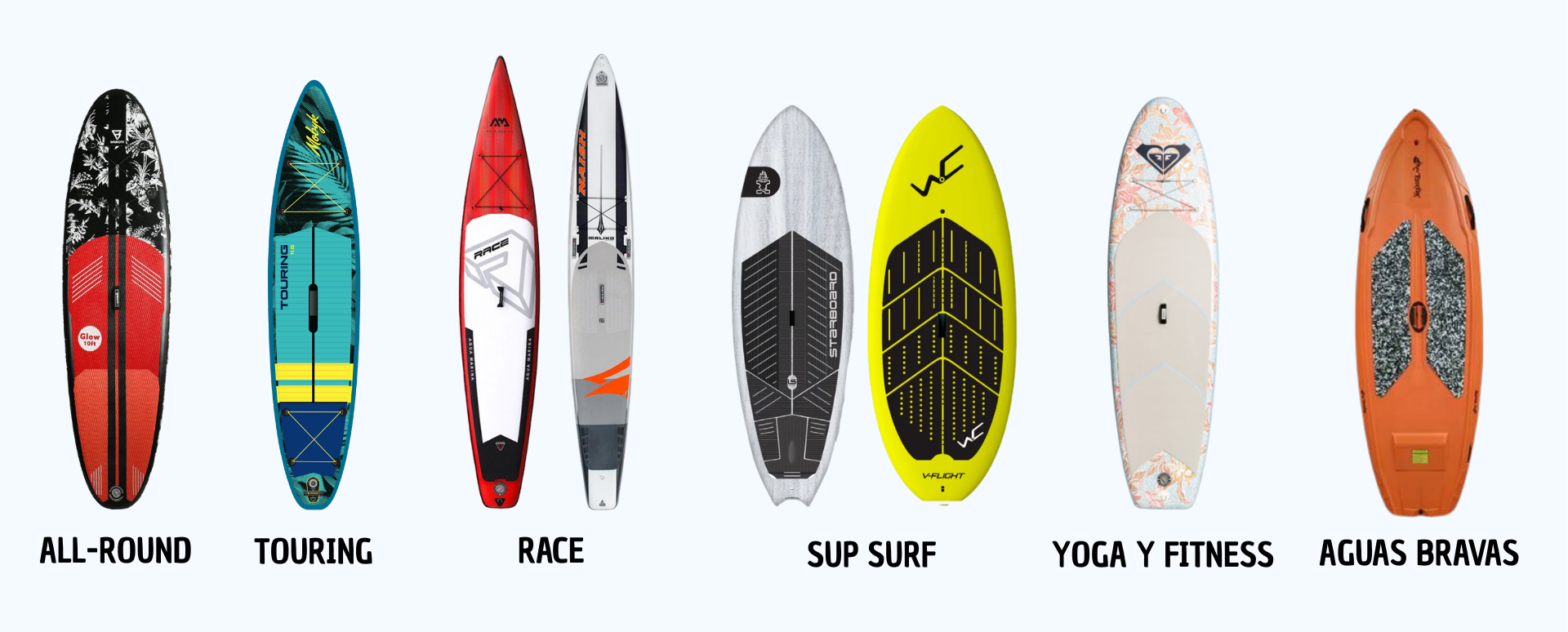
Choosing correctly not only improves your experience on the water, but also influences your safety, your progress, and your performance on each outing.
In this Nautical guide, we explain the main types of boards, their materials, characteristics, and the key factors to consider when making your choice.
Main types of paddle surf boards
All-Round Boards
All-Round boards are the most versatile and widely used, especially by those new to paddle surfing. They are wide with a rounded bow, which provides great stability and makes it easy to balance from the very beginning.
They perform well in both calm waters and seas with little swell, making them an ideal choice for recreational use, coastal trips, or occasional sessions.
They are recommended for beginners and users looking for a single board for different situations.
Touring Boards
Touring boards are designed for long trips and crossings. They are longer and narrower than All-Round boards, allowing for better glide and greater efficiency with each stroke.
Thanks to their streamlined shape, they maintain direction better and require fewer corrections, which translates into less fatigue on long trips.
They are an excellent choice for experienced users who enjoy exploring the coast, lakes, or long routes.

Race Boards
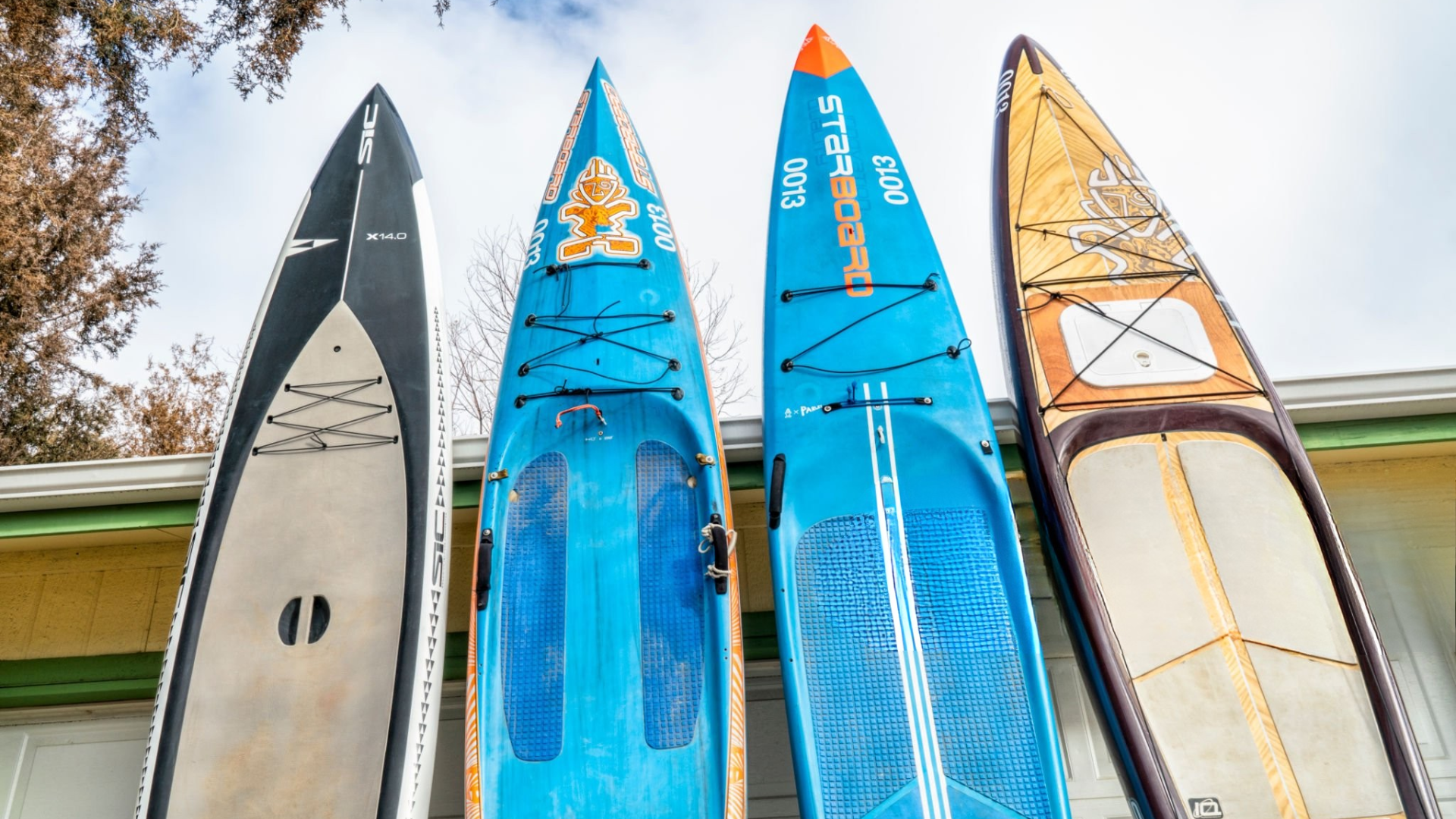
Race boards are designed for maximum performance and speed. They have a very narrow and elongated design, optimized to reduce water resistance.
They offer great gliding ability, but in return require good technique and balance. They are not the most recommended for beginners, as they are less stable.
They are geared towards competition, intensive training, and advanced users.
SUP Surf Boards
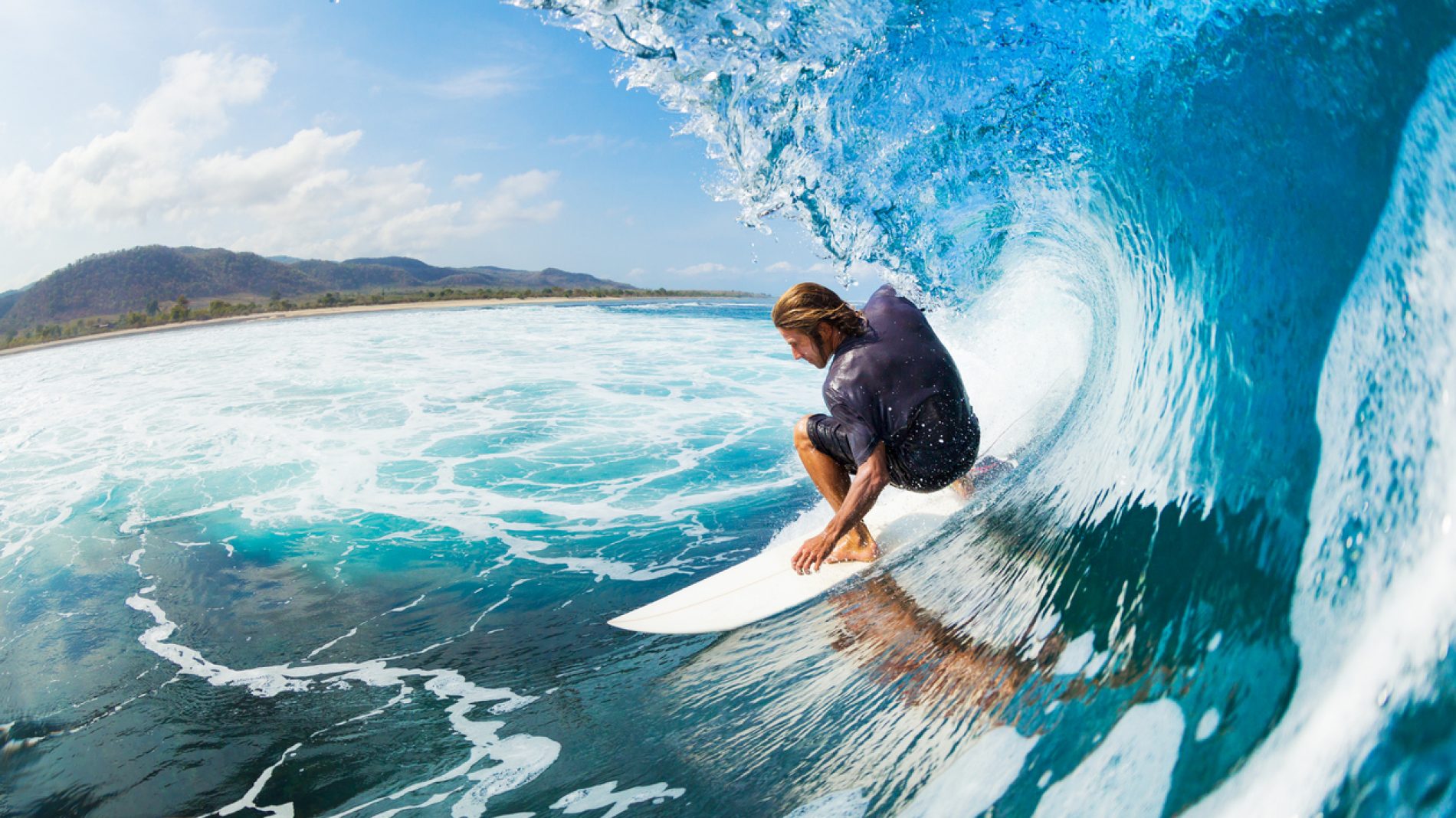
Boards designed for surfing waves are shorter, more maneuverable, and responsive. They feature greater curvature at the bow and tail, which facilitates turns and control in breaking waves.
They allow you to combine traditional surfing with paddling, offering a more dynamic and technical experience.
They are suitable for riders with previous experience in surfing or paddle surfing.
Yoga and Fitness Boards
These boards are designed for calm activities such as yoga, Pilates, or functional exercises on the water. They feature a very stable, wide, and comfortable surface.
They are usually inflatable and have reinforced non-slip areas, allowing you to perform movements safely.
They are ideal for those seeking well-being, balance, and relaxed activities in natural environments.

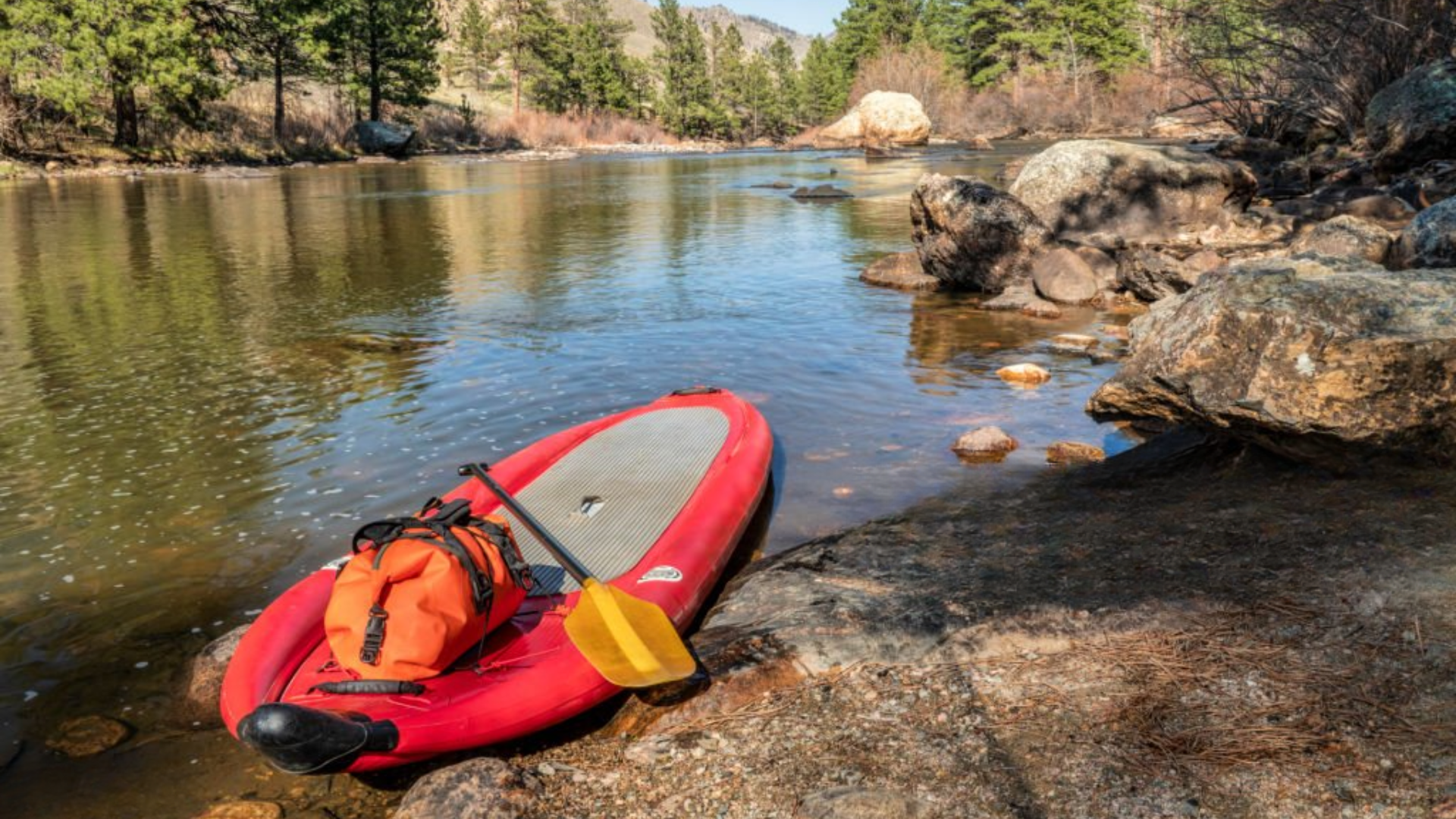
River and whitewater boards
River boards are designed to withstand currents, obstacles, and sudden changes in depth. They are shorter, more resistant, and easier to maneuver.
Their construction is reinforced to withstand impacts against rocks and other elements.
They are intended for users with experience and training in navigating fast-moving waters.
Materials and types of construction
The material of a board directly influences its weight, rigidity, durability, and performance in the water.
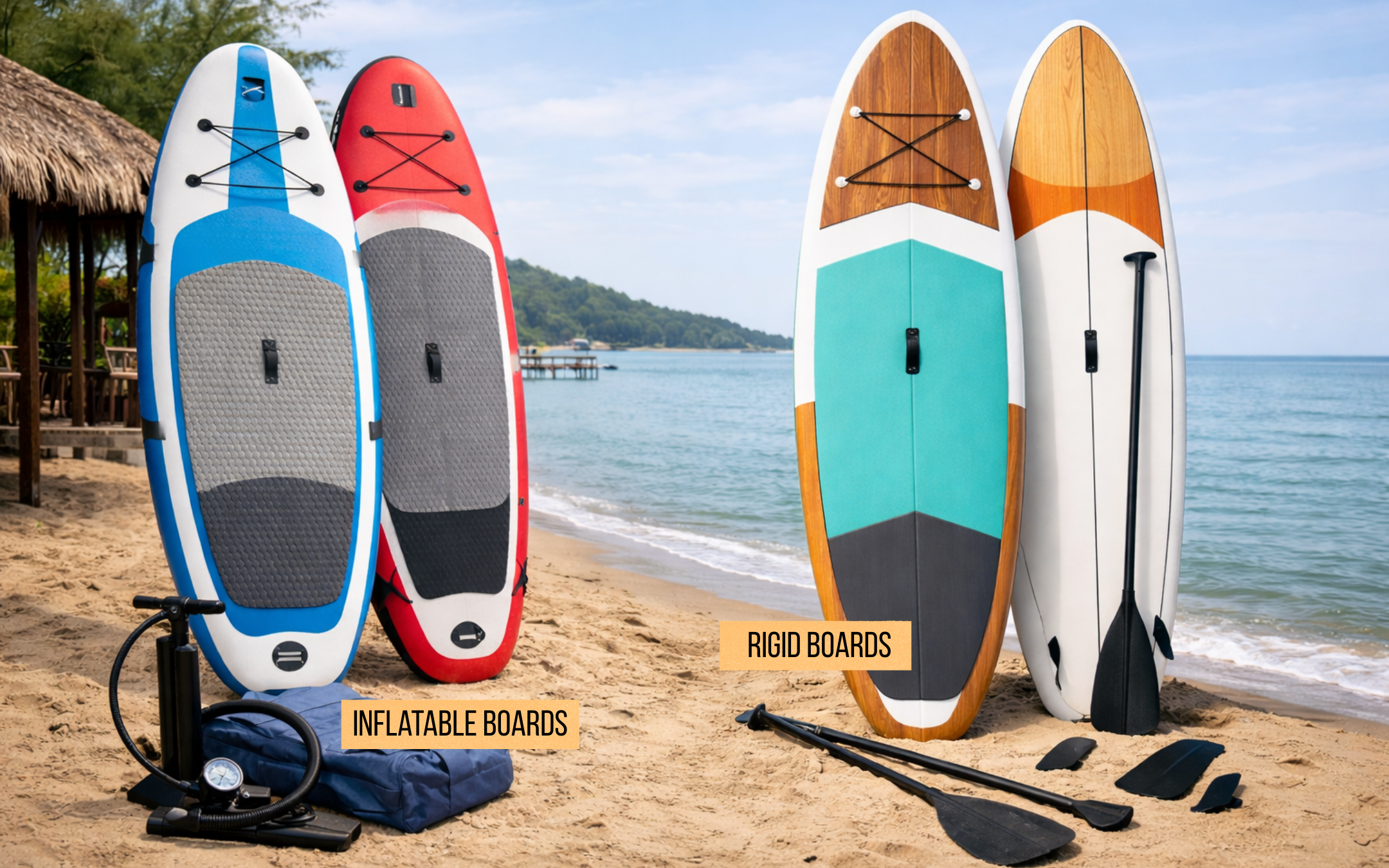
Inflatable boards
Inflatable boards are made of reinforced PVC and Drop-Stitch technology, which allows them to achieve great rigidity when inflated.
They are easy to transport and store, and highly resistant to minor impacts. For this reason, they are the most popular choice for beginners, travelers, and recreational users.
In recent years, the quality of inflatable boards has improved significantly, offering performance very similar to that of rigid boards.
Rigid boards
Rigid boards are manufactured on an EPS foam core covered with fiberglass, epoxy resin, or technical materials such as carbon.
They offer higher performance, better response in the water, and more precision in maneuvers, especially in surfing and competition.
In exchange, they require greater care, storage space, and specialized transportation.
Key characteristics of a paddle surfboard
Beyond the type and material, there are several technical factors that influence a board's performance.
Length determines speed and glide. Long boards are faster and more efficient, while short boards are more maneuverable.
Width influences stability. The wider the board, the easier it is to maintain balance, especially for beginners.
Thickness and volume affect buoyancy. A board with adequate volume will better support the user's weight and offer greater comfort.
The shape of the hull and keel determine direction, control, and response in different conditions.
How to choose according to your level and how you practice
Beginners
If you are just starting out, it is best to opt for an inflatable all-round board with good width and sufficient volume. This will allow you to learn safely and progress without frustration.
Stability and ease of use should be your priority at this stage.
Intermediate level
Once you have mastered balance and basic technique, you can start to specialize. At this point, touring boards or specific surf models are good options depending on your goals.
You can also consider rigid boards if you are looking for higher performance.
Advanced level
Experienced users often opt for race boards, technical SUP surfboards, or high-performance rigid models.
At this level, weight, hydrodynamics, and precision are key factors.
Practical tips before buying your board
It is essential to take your weight and height into account, as these directly influence the volume required.
Assess the space available at home and the transport system before deciding between inflatable or rigid.
Don't be guided solely by price: a medium-quality board usually offers better durability and experience than a very cheap model.
If possible, try out different boards before buying or consult with specialized professionals.
Also invest in quality accessories, such as a paddle, leash, or life jacket, as these directly affect your safety.
Knowing the different types of paddle surf boards, their materials, and characteristics is essential for making a good decision and fully enjoying this sport. Each board is designed for a specific style of surfing, level, and conditions. Choosing the right one will allow you to progress safely, comfortably, and confidently in the water.









_v2.svg)
_v2.svg)








_v2.svg)