
Barefoot Water Skiing: What It Is and How It’s Done
Is it possible to water ski without wearing skis? Yes. Barefoot water skiing is a sport in which the athlete glides directly across the water barefoot, attached to a rope and pulled by a boat.
Although it may seem like an extreme version of conventional water skiing, it has its own techniques, maneuvers, and competitions. Furthermore, it is one of the disciplines recognized by the International Waterski Wakeboard Federation (IWWF).
How Did Barefoot Water Skiing Begin?
The origins of this sport date back to 1947 in Winter Haven, Florida, when A.G. Hancock managed to glide across the water without using skis. That same year, Dick Pope Jr. was also photographed practicing barefooting at Cypress Gardens, helping to popularize this new form of water skiing.
Over the following decades, the sport developed new techniques and began to gain international recognition. In 1978, the first Barefoot Water Skiing World Championships were held in Canberra, Australia, with 54 participants from ten countries.
The Three Disciplines of Barefoot Water Skiing
International competition is organized into three disciplines: slalom, tricks, and jumps.
Slalom
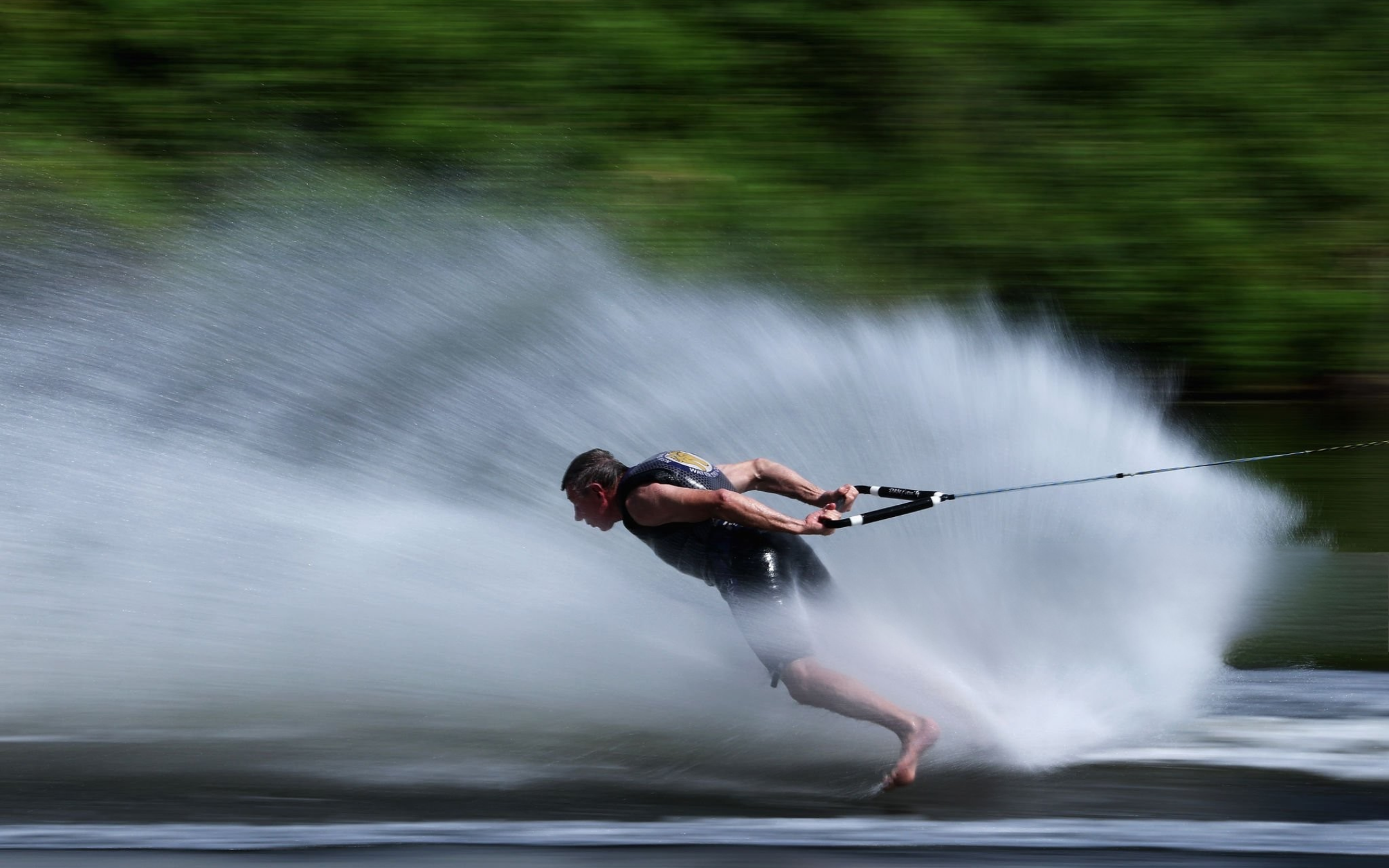
The goal is to navigate the wake created by the boat in various patterns. Courses can be completed forward or backward, and some maneuvers are performed on one foot.
Precision and the ability to maintain control during the runs are essential for achieving a high score.
Tricks
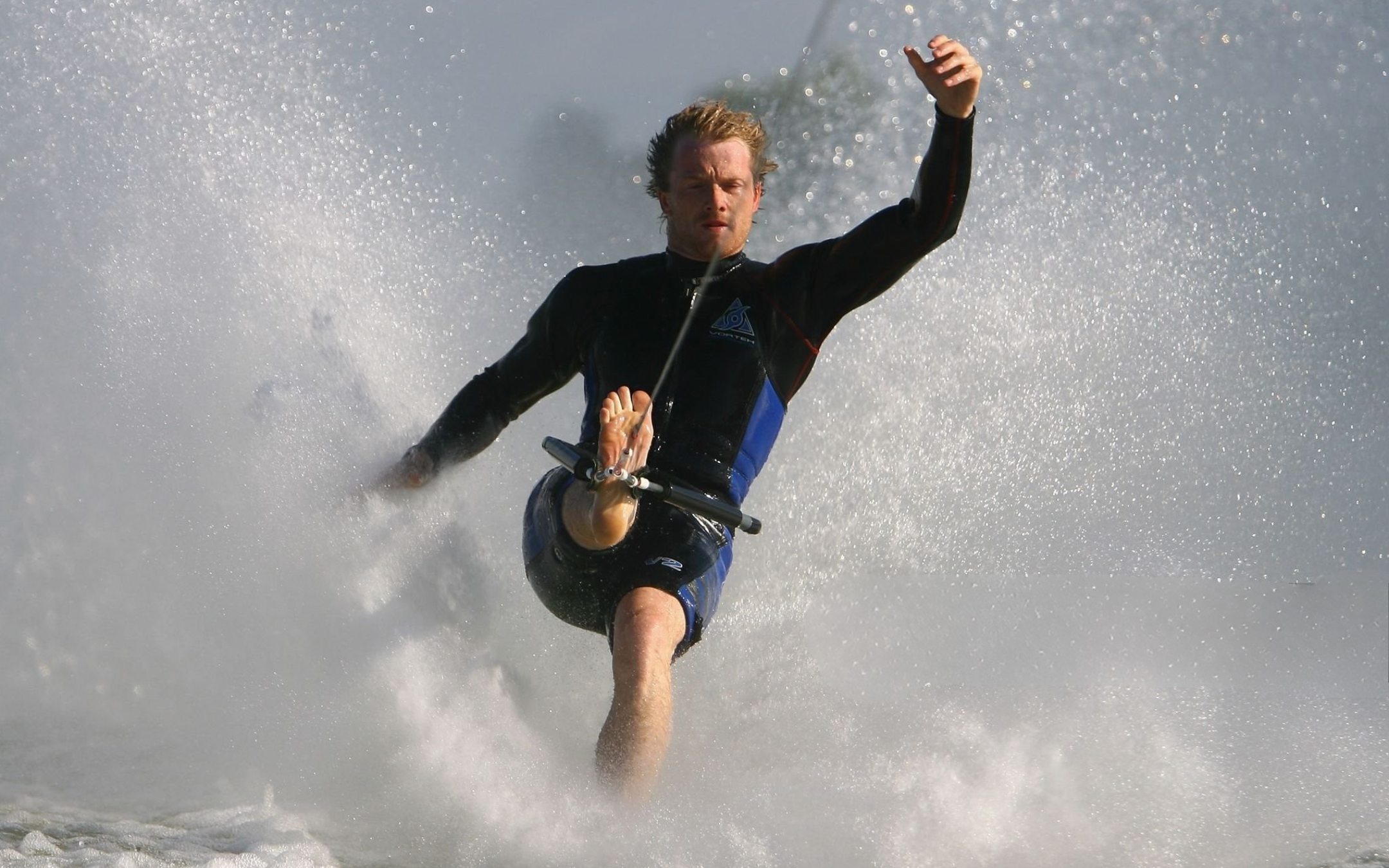
In this discipline, athletes perform various acrobatic maneuvers during the run. The rules specify which tricks are eligible for points and the criteria for evaluating their execution.
The variety and difficulty of the moves, along with the correct execution of each one, determine the final score.
Jump
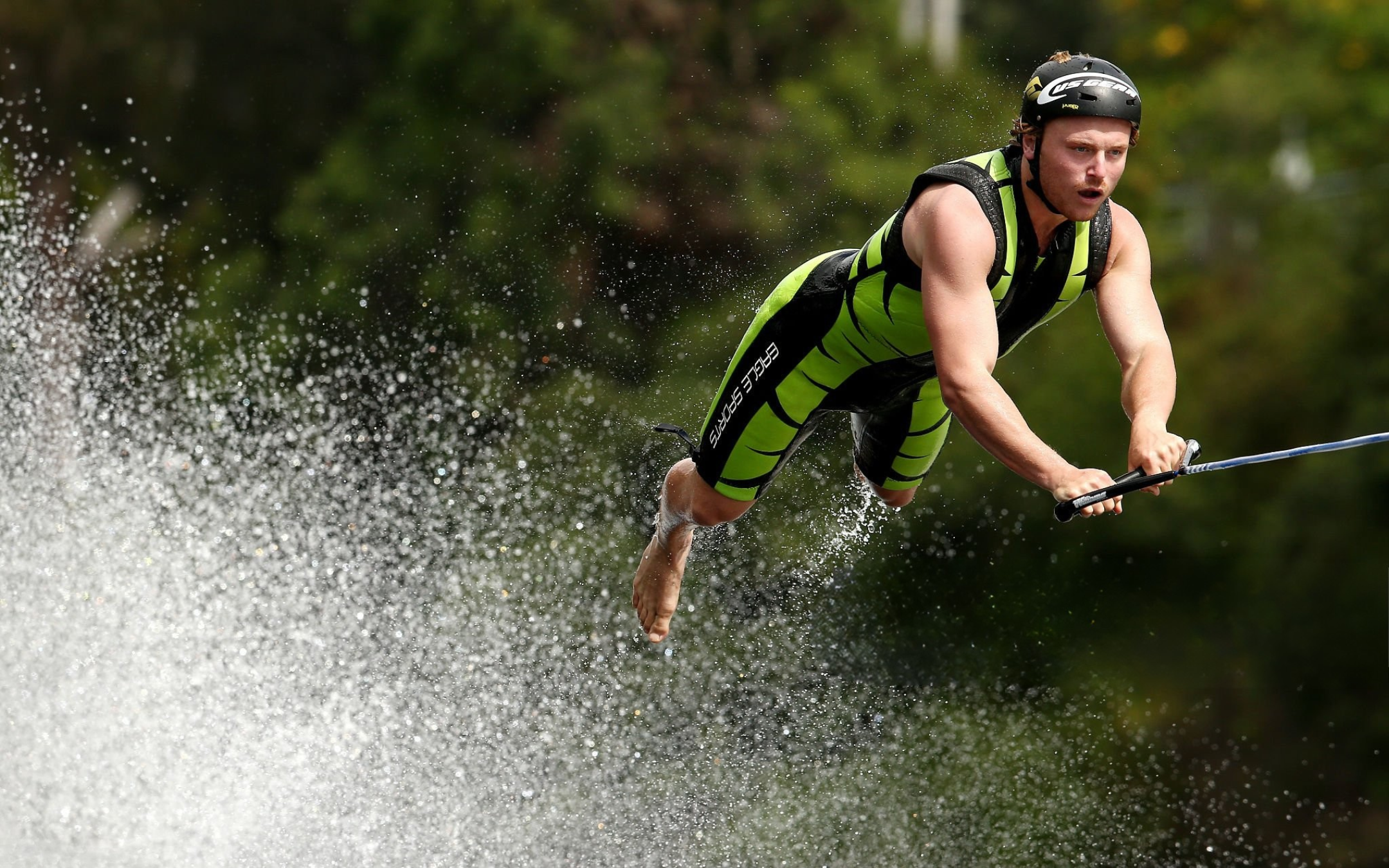
This is probably the most spectacular event. The athlete uses a ramp to launch himself off the water and achieve the greatest possible distance.
The approach, speed, body control, and landing all influence the execution of the jump, while the distance determines the score.
How is it practiced?
Barefoot water skiing requires a specific technique because the feet are in direct contact with the water, and the athlete must maintain balance at high speeds.
For this reason, training typically begins by working on posture and body control before moving on to more complex maneuvers. It is also important to have a boat, rope, and equipment suitable for the sport and to practice under controlled conditions.
A Sport with Its Own Identity
Barefoot water skiing has evolved from that first experience in Florida into an international sport with its own rules, championships, and specialists.
Its combination of speed, balance, technique, and acrobatics makes it one of the most eye-catching disciplines in towable water sports.And although it might seem that removing the skis makes everything easier, the opposite is true: the direct contact of the feet with the water completely changes the technique and turns every run into a true exercise in precision.
Related News










_v2.svg)
_v2.svg)









_v2.svg)